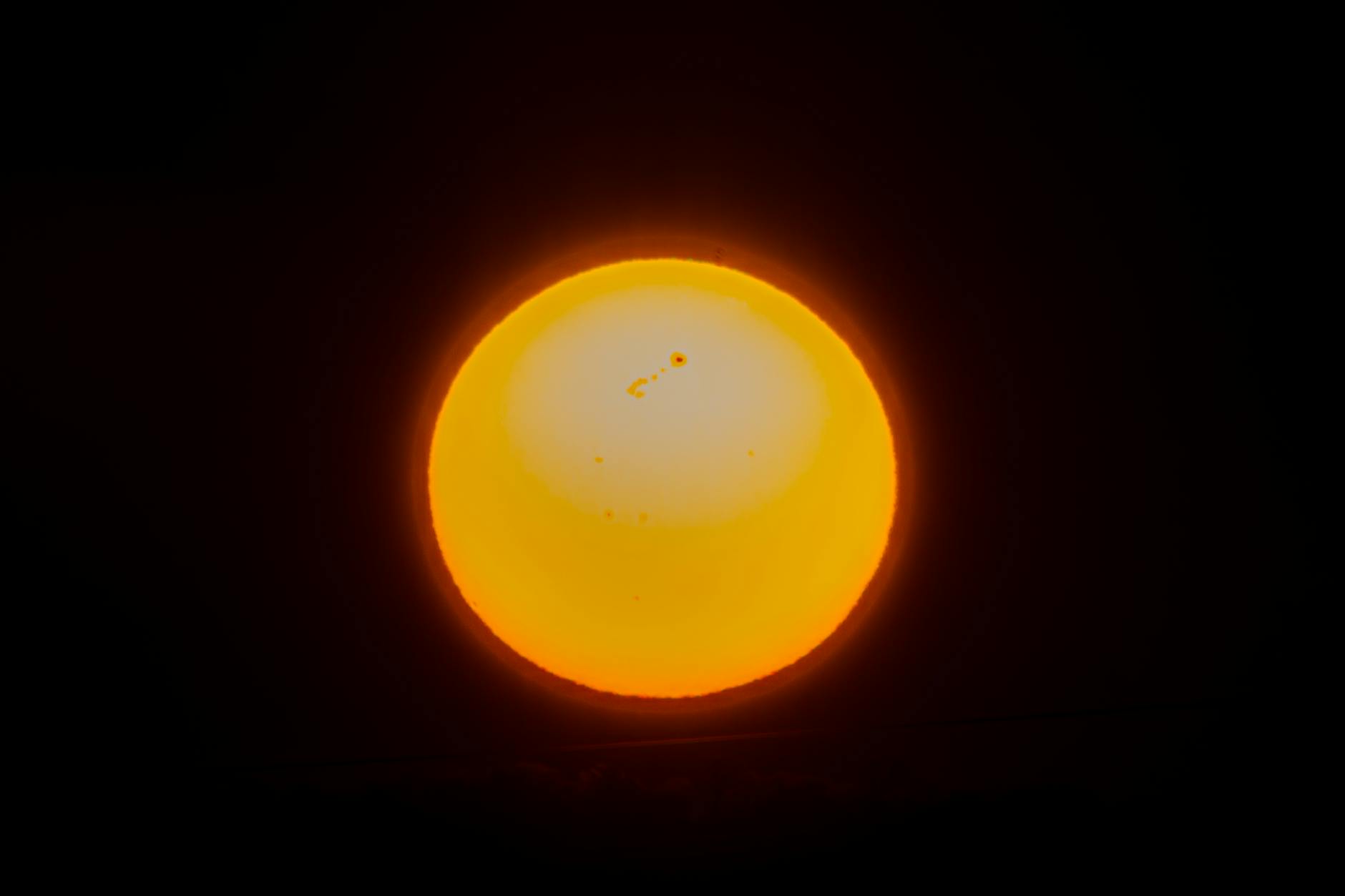
Imagine looking up at the sky and suddenly everything goes pitch black. No warning, no gradual sunset, just an instant curtain of darkness. If the Sun vanished right now, life on Earth would transform in ways that sound like a disaster movie. However, the first few minutes might actually be more normal than you would expect.
Because light takes about eight minutes to reach our planet, we would not even know the Sun was gone for a short while. We would continue to see it shining in the sky until the very last rays finally arrived. Interestingly, gravity also travels at the speed of light. This means Earth would stay in its steady circular orbit for those same eight minutes. Once that time is up, the world would plunge into permanent night and our planet would stop orbiting. Instead of moving in a circle, Earth would go flying off into the void of deep space in a straight line at thousands of miles per hour.
While the immediate darkness would be terrifying, the drop in temperature would be the true threat. Here is a timeline of what would happen to our environment:
- Within one week, the average global temperature would drop to about zero degrees Fahrenheit.
- Within a year, the surface temperature would plummet to negative 150 degrees, causing the oceans to freeze over from the top down.
- Photosynthesis would stop immediately, meaning most plants would wither and die within days or weeks.
- Eventually, the atmosphere itself would get so cold that it would freeze and collapse to the ground.
Humans would have to find new ways to stay warm and produce food. We would likely need to move deep underground to stay close to the natural heat of the Earth core. We would also have to rely on nuclear or geothermal energy since solar power would be gone and the atmosphere would eventually be too thin for wind. While the surface would become a frozen, silent wasteland, some forms of life could still thrive deep in the ocean near volcanic vents.
In the end, the loss of our star would turn Earth into a lonely, frozen traveler drifting through the galaxy. It is a chilling thought, but it highlights how vital that big yellow ball in the sky is for everything we do. We often take the Sun for granted, but it is the literal engine of our existence.
Leave a Reply